Multifamily Housing Buyer’s Guide
June 8, 2026
How to get your fitness space right the first time
A practical guide to planning a multifamily fitness space that fits your property, supports residents, adds value to your asset and makes it easier for your team to manage over the long term.
A fitness space should add value, not extra work
For multifamily properties, the fitness center does more than support workouts. It helps shape the resident experience. It can strengthen a property tour. It can make the community feel more complete, more competitive and more appealing to current and future residents.
83% of renters consider fitness centers important or essential
Source: Greystar 2025 Design Survey
That is why it pays to plan the space carefully from the start. Getting the fitness room right means thinking beyond equipment count. It means building a room that reflects the needs of your community, fits your square footage and budget and supports the level of use your property is likely to see over time.
A well-planned fitness space can help you:
- add value to the property without wasting space or budget
- make smarter decisions before layout or equipment mistakes become costly
- create a space that feels open, useful and easy to manage
- make a stronger impression during tours and lease-up
- reduce avoidable service and planning issues over time
Start with the right plan
The best fitness spaces start long before the first workout. This is where guidance from a fitness equipment partner that understands multifamily housing can make a real difference. By asking the right questions early, you can set your space up for success.
Resident Profiles
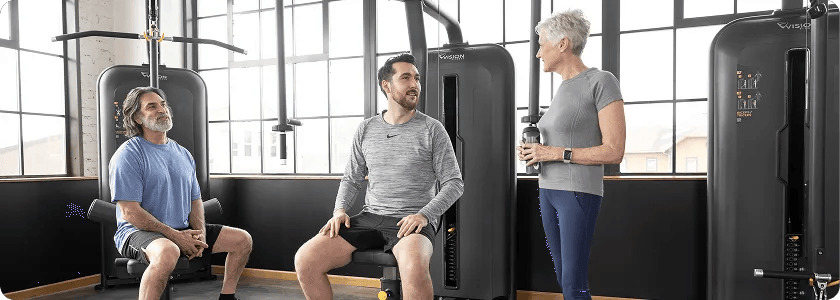
First, think about who will use the room. The right mix depends on the residents you want to attract and the experience that fits the property. That is why resident profile should help shape the plan from the start.
What to ask:
- What products would you recommend based on my target demographic?
Popular Products by Resident Profile
Student & Young Professional Housing
Cardio
- ENT Console
- Stairclimber
- Treadmill
- Air Bike
- Indoor Cycle
Strength
- Smith Machine
- Keystone Selectorized
- Dumbbell Rack & Bench
Adult & Single-Family Communities
Cardio
- ENT Console
- Treadmill
- Ascent Trainer
- Stairclimber
Strength
- Functional Trainer
- Keystone Selectorized
- Dumbbell Rack & Bench
Senior Living
Cardio
- DLED Console
- Recumbent Bike
- Suspension Elliptical
- Treadmill
Strength
- Access Selectorized
- Dumbbell Rack & Bench
Warranty
Warranty deserves a closer look when comparing options. Light commercial and full commercial products are not covered the same way, and that difference can affect long-term value. A lower-cost option may seem attractive up front, but it may not provide the same level of coverage or the right fit for a property with heavier daily use.
What to ask:
- Is the warranty designed for a multifamily setting and the amount of traffic my property is likely to have?
- What does the coverage include, and how long does it last?
Budget
A clear budget range helps shape better recommendations from the start. It helps you make practical tradeoffs and avoid spending in the wrong places. In some cases, it may make sense to invest in more pieces with simpler consoles. In others, the better fit may be fewer pieces with a different user experience.
What to ask:
Ask for two options, one that fits your current budget and one that reflects a stronger long-term solution.
Good planning can help you choose a room layout, product mix and equipment level that fit your property from day one and stay easier to manage over time.
Plan the right room for your property
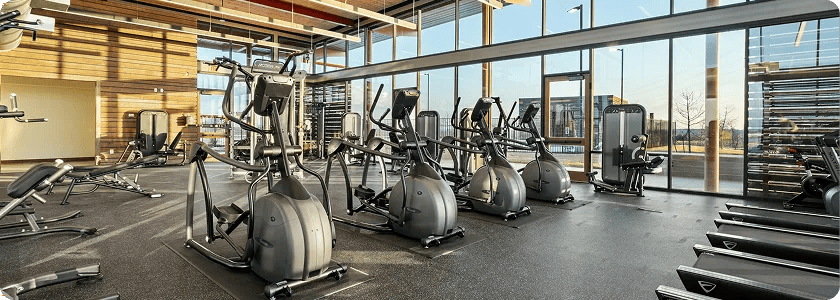
The right fitness plan starts with the size of the property and the space available. The number of units can help estimate expected traffic, guide room size and shape the right product mix from the start. Smaller communities may be best served by a compact room with core cardio, basic strength and a simpler overall mix. As properties grow, the room often needs more variety, more capacity and equipment built for heavier daily use. Looking at common room sizes can help show what each footprint can realistically support and how to build a fitness space that fits the property well.
Small room | 200 units or less | ~ 400 sq ft
A smaller room can still deliver a strong resident amenity. The goal is to create a credible, comfortable fitness offering that covers core needs without crowding the space.
In many cases, a small room works best with a cardio-forward mix. Treadmills, ellipticals and exercise bikes can cover a wide range of needs. From there, a compact strength option like a functional trainer, dumbbells and a bench can add enough variety for strength training without overwhelming the room. Keep the layout open and easy to move through.
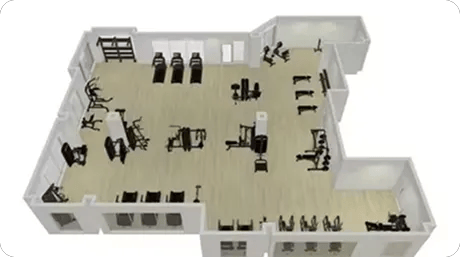
Medium room | 201–399 units | ~ 900 sq ft
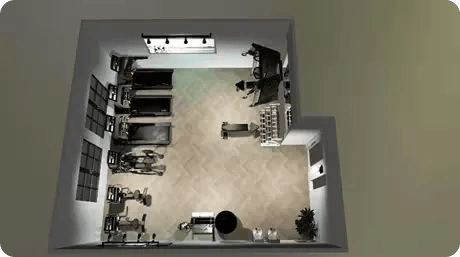
As traffic increases, the room often needs more variety and a stronger overall mix to support broader resident use. A medium-sized room gives you more flexibility. You can add cardio variety, build out strength more fully and still leave enough open space for flow.
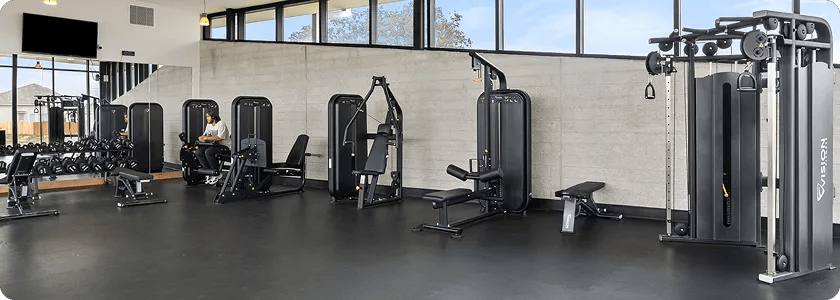
This footprint often supports a balanced mix with multiple cardio options and a few additional strength pieces, such as a Smith machine and three to four selectorized stations. Where space efficiency matters, dual- or multi-station units can help broaden the offering while keeping the room balanced and easy to navigate.
Popular selectorized choices:
- Leg press / leg curl
- Pec fly / rear delt
- Lat pulldown / row
- Ab / low back
- Multi press
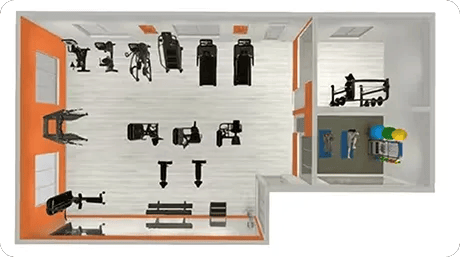
Large room | 400 units or more | ~ 1400 sq ft or more
A larger room gives you the flexibility to build a more complete fitness offering for the property. In many cases, that means planning for greater capacity, clearer training zones and a broader mix that can serve more residents throughout the day.
This type of space can often support multiple cardio pieces across key categories, for a total of roughly 8 to 12 pieces, along with dedicated free weight and selectorized strength areas. It may also create room for a few key plate-loaded pieces and a more flexible area for stretching, yoga, Pilates or other group fitness activities. For larger, more trend-driven properties, that added flexibility can make the fitness space feel more current, more versatile and better aligned with resident expectations.
What most multifamily spaces need
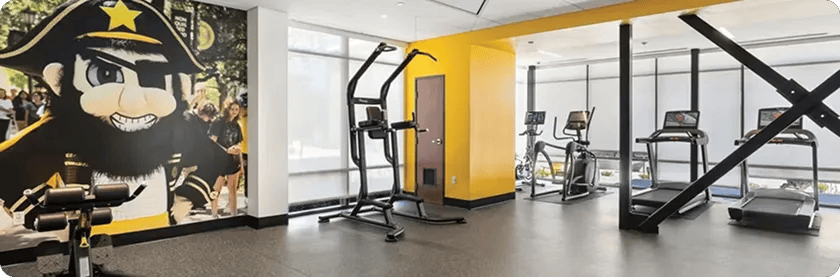
In most multifamily settings, cardio leads the plan. Residents want familiar equipment that supports quick, effective workouts, making treadmills, ellipticals, bikes and stairclimbers core pieces in many fitness rooms. A cardio-forward space often fits both resident expectations and the day-to-day role of the amenity.
Strength still matters, and it is becoming more important as training preferences continue to shift. The key is to keep the mix practical. Lower-body equipment, upper-body basics and approachable strength options can add variety without making the room feel too specialized.
A good multifamily fitness room should feel balanced, not crowded. It should give residents enough variety without becoming hard to plan, hard to use or hard to manage. That means thinking beyond equipment to details like traffic flow, door and window placement, storage for accessories, space for personal belongings, a water cooler, towel storage, TVs and audio needs. Planning these elements early can help the room feel more complete, more functional and easier to manage over time.
Avoid the mistakes that create extra work later
Many fitness room problems start early. A few planning misses can affect the look, function and long-term value of the space.
One common issue is waiting too long to plan electrical. Cardio placement, floor power and console needs should be considered early. If they are not, you may end up with visible wiring, awkward equipment placement or a room that feels less polished than it should.
Spacing is another area that deserves close attention. Walking paths, equipment placement and ADA needs can all affect what truly fits in the room. A layout can look fine on paper and still feel crowded in use. This is why open space, sight lines, views from cardio equipment and thoughtful placement matter so much in multifamily settings.
Mistake
- Waiting too long to plan power and layout
- Overfilling the room
- Using the same plan for every property
Better Approach
- Plan electrical, spacing and room flow before the layout is finalized
- Leave space for movement, visibility and a better experience during tours
- Match the room to the residents, the traffic and the property type
A better choice keeps working after install
A good fitness decision is not just about today’s quote. It is about choosing a partner that can help you make a sound long-term decision.
In multifamily, that matters. The fitness room should support residents, add value to the property and stay manageable for the team over time. That is easier to do when a provider helps you think beyond price alone and look at planning, product fit, service expectations and long-term support.
A lower upfront cost may not lead to the best outcome if the mix is wrong for the space, the equipment does not match the setting or support becomes harder after installation. The right partner should help you make a clearer decision now and avoid issues later.
What to look for in a fitness equipment partner
- Will they help you choose the right mix for your space and residents?
- Can they provide layout guidance before you make a final decision?
- Do they understand the needs of multifamily properties?
- Can they explain how to match equipment level to expected usage?
- Will they help you think through electrical, spacing and room flow?
- Will they walk you through warranty, service and preventative maintenance considerations?
- What support will be available after installation?
- Can they help you plan for future refresh or replacement needs?
- Are they helping you make the right long-term decision, or just the fastest purchase decision?
Once you know what to look for in a partner, the next step is getting clear on what your own property needs. These questions can help shape that plan.
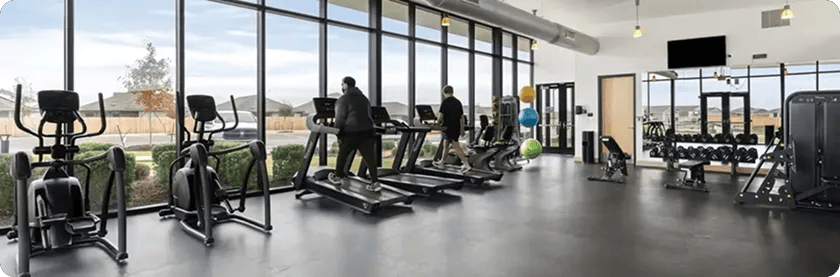
Kickstart your fitness center planning with these simple questions
- Who are your primary residents?
- What should the fitness room do for your property?
- How much space do you have?
- How many units will the room serve?
- What level of daily use should you expect?
- Have you planned for electrical and spacing?
- What kind of equipment mix fits the room best?
- What support will you need after installation?
The right fitness space should work well for residents from the start and stay manageable for the team over time. A thoughtful plan, the right equipment mix and the right partner can help you create an amenity that adds value to the property and supports your community for the long term.
Ready to start planning a fitness space that fits your community? We’re here to help you through the next steps. Contact us to start the conversation.