Commercial Stairclimber Buying Guide: How to Choose the Right Step Mill for Your Facility
January 28, 2026
If you’ve been thinking about adding stair climbing equipment to your fitness facility, you’re not alone. From health clubs, to corporate wellness, to multifamily housing fitness centers, more facility operators are exploring stairclimbers—also called step mills, stair mills, or simply “climbers”—as a smart, in-demand option for members and residents.
This guide will help you evaluate different types of climbers, understand what to look for in a commercial model, and ask the right questions before you invest. It’s not about chasing the latest trend. It’s about making a lasting choice that adds value to your facility, stands up to real-world use, and keeps your users coming back.
Why Stairclimbers Are on the Rise
Stair climbing has long been praised as one of the most effective, efficient workouts. It’s functional. It works major muscle groups. It raises the heart rate quickly without pounding the joints. And perhaps most important, it’s familiar. Almost everyone knows how to climb stairs.
For your users, it’s a fast track to results. For you, it’s a way to offer a versatile cardio modality that appeals to a wide demographic. Whether your facility serves seasoned fitness enthusiasts or casual exercisers, stair climbing offers something for everyone. If you're looking for more reasons to believe in its impact, take a look at 15 Reasons Members Love the Stairclimber.
Research backs this up. One study published in the European Journal of Preventive Cardiology linked regular stair climbing with lower cardiovascular and all-cause mortality rates. That means more than just a good workout. It’s a workout that supports long-term health.
Choosing the Right Type of Climber
Not all stair climbing machines are the same. Understanding the differences will help you choose the right fit for your space and your users.
Stairclimbers (also known as step mill, stair mill, climber): Stairclimber machines feature a rotating staircase that closely mimics real stair climbing. They’re the most popular style in commercial gyms and are known for delivering a tough but rewarding workout. Some step mills now feature more compact frames that make them easier to fit in a range of layouts.
Stair Steppers: These use individual pedals that go up and down, often in a smaller footprint. They typically cost less and take up less space but can feel less natural for some users.
Vertical Climbers: These are high-intensity machines that involve both arms and legs in a climbing motion. They're not as common in shared-use facilities due to their intensity level and more niche appeal.
If you’re looking for a machine that’s recognizable, approachable, and capable of delivering results to a broad group of users, a step mill is usually the most versatile choice.
What to Look for in a Commercial Stairclimber
The basics matter, but when you’re buying for commercial use, you have to look beyond just how it feels during a demo. Here’s where to focus:
Footprint and Ceiling Clearance
How much space does the machine take up? How much floor space does it take up? Will it fit under your ceiling when a user is on the top step? These are make-or-break considerations for a lot of facilities. Some stairclimbers are designed with more compact footprints, which can help when space is tight.
Step Design and Resistance Levels
A large, open step platform and a low step-on height make a big difference in how safe and accessible the machine feels. Resistance matters, too. Look for a wide range of levels to support everyone from beginners to more advanced users.
Durability and Construction
This is where short-term savings can become long-term costs. Look for a sweat-resistant design that diverts liquid away from the mechanical systems, quality internal components, and a solid frame that’s built for high-traffic use.
User Stability and Safety Features
Full-length handlebars, infrared user detection, smooth speed control to prevent users from speeding up too quickly, dual braking and a clear emergency stop button all contribute to a safer experience, especially in unsupervised or mixed-use facilities.
Ease of Maintenance
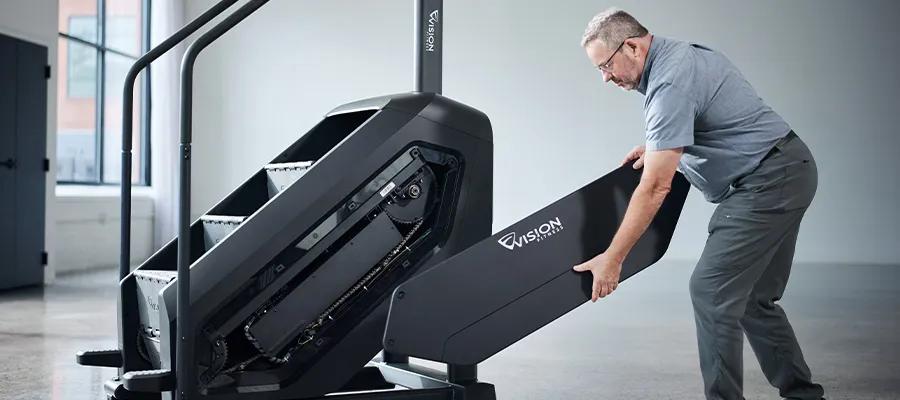
Quick-release covers and thoughtfully positioned service components can significantly reduce downtime and maintenance labor.
Console Choices
Depending on your audience, you might want to keep it simple, or you might want to offer entertainment features. Some models allow you to choose the console separately from the frame, which can help control cost while giving you flexibility.
Questions Worth Asking
Before you commit, ask your rep or vendor:
What’s the recommended ceiling height for this machine?
What’s the typical service schedule?
Is this designed for high-traffic, commercial use?
What’s the real-world lifespan?
How do you access internal components?
How easy is it to get replacement parts?
What level of testing is done by the manufacturer to ensure durability?
A reliable supplier should have direct, specific answers to these questions.
Pros and Cons: Know What to Expect
Every machine has trade-offs. Here’s how to think through them:
Footprint: Smaller is easier to place on a compact cardio floor but if it’s too small, it can feel cramped for larger users.
Step-up Experience: Stepping from the ground to the first step is a more direct onboarding experience but an intermediary step is more accessible for users of all heights.
Step Height: Lower steps are more inclusive but can feel like less of a workout for more experienced users. Higher steps can feel like a more challenging workout but may feel more intimidating for some.
Resistance Range: More levels give you better programming flexibility. Fewer levels can limit progression.
Durability: Stronger machines that undergo extensive quality testing will last longer. Lower-quality machines might save you money upfront but cost more later.
Maintenance Access: Easier access = less downtime. Machines with poor service design can frustrate your team.
Safety: Look for modern safety features, especially when it comes to the space between the ground and the bottom stair where dropped water bottles or small balls could get trapped. These are non-negotiable in high-use settings and unstaffed facilities.
Final Thoughts
Adding a stairclimber to your cardio lineup can bring serious value to your facility. But not all machines are built the same. Ask the right questions. Look beyond flashy features. And think about how your decision will play out over the next five to ten years.
The best machines are the ones that consistently work, fit your space, meet your users’ needs and don’t create service headaches. You’ll know the right one when you find the model that feels purpose-built for your facility, not just another machine on the floor.